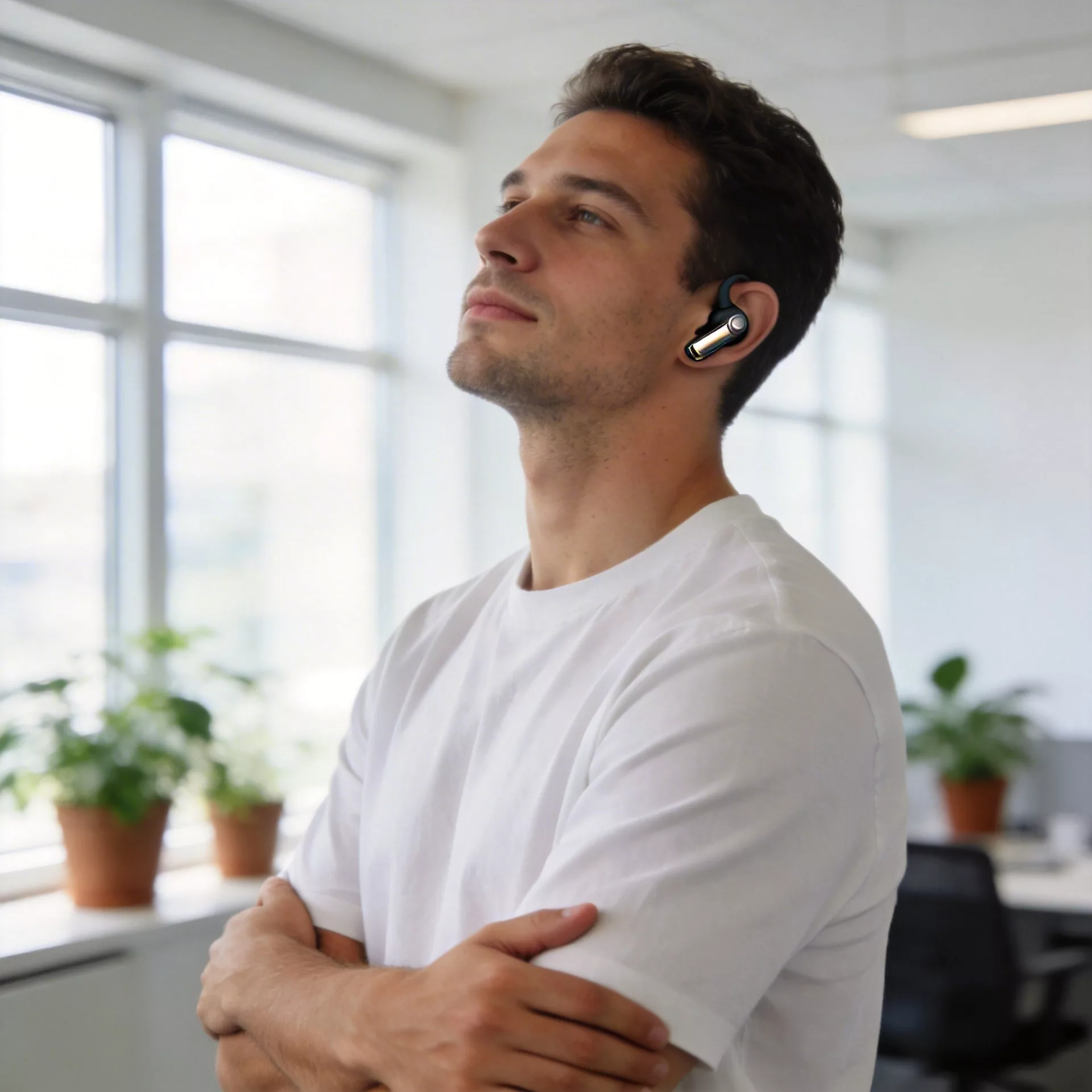
Have you ever wondered why today's noise-canceling headphones are becoming increasingly "intelligent"? The answer lies in a revolutionary shift in noise cancellation technology. The leap from ANC to AI-powered noise cancellation is like going from a "fixed program" to a "smart assistant." Traditional ANC operates like a one-size-fits-all solution — it handles every type of noise the same way. AI noise cancellation, by contrast, works like an "intelligent butler," capable of identifying different noise types and addressing each with a targeted approach.
Simply put, traditional ANC says, "I know there's noise here — I'll cancel it," while AI noise cancellation says, "I know exactly what this noise is, and I know the best way to eliminate it." This shift has improved noise cancellation performance by more than 30%, especially in complex environments such as subways, airplanes, and offices. According to IDC's Q1 2026 Audio Technology Report, user satisfaction among headphone owners with AI noise cancellation reached 92% — 27 percentage points higher than those with traditional noise cancellation.
That said, AI noise cancellation comes with its own set of challenges. It demands greater computational resources — so how is power consumption managed? Algorithm optimization requires large volumes of data — so how is user privacy protected? These are questions the industry must confront. According to Gartner's 2026 Technology Trends Analysis, power efficiency in AI noise cancellation algorithms improved by 35% over the past 12 months, yet data privacy remains one of the top three concerns among users.
Personalized Noise Cancellation: Making Your Headphones Understand You Better
Imagine if your headphones could "remember" your usage habits — what would that feel like? That's the appeal of personalized noise cancellation. In 2026, many headphones allow users to upload environmental recordings for algorithm optimization, essentially giving the headphones a "custom noise cancellation profile." According to the Smart Audio Devices Report published by Strategy Analytics in February 2026, 78% of users said that personalized noise cancellation significantly improved their experience.
Multi-scene one-tap switching has already become a standard feature, with modes such as "Subway Mode," "Office Mode," and "Café Mode." AI voice enhancement technology has dramatically improved call quality, enabling clear conversations even in noisy environments. These features are transforming headphones from single-purpose noise cancellation devices into intelligent terminals that meet diverse user needs across different scenarios. According to J.D. Power's 2026 Audio Device User Satisfaction Survey, headphones with multi-scene switching received a user recommendation rate 43% higher than ordinary headphones.
Edge Computing and Local Processing Deliver Faster Response
You may have heard of "cloud computing," but are you familiar with "edge computing"? In simple terms, edge computing places processing power directly on the device rather than relying on the cloud. AI noise cancellation algorithms are increasingly moving in this direction — and what does that mean? It means faster response times, lower latency, and stronger privacy protection. According to Qualcomm's 2026 Technology White Paper, edge computing AI noise cancellation responds three times faster than cloud-based processing, with latency reduced to under 15ms.
For gaming headsets in particular, low latency is critical — edge computing allows AI noise cancellation and gaming performance to integrate seamlessly. According to Newzoo's 2026 Gaming Market Report, the esports headset market is projected to reach $8.7 billion, with low-latency technology becoming the primary purchasing consideration for users. Edge computing AI noise cancellation is fast becoming standard in premium gaming headsets.
Cross-Device Collaborative Noise Cancellation Creates a Seamless Experience
Smart devices are multiplying — phones, tablets, headphones, watches — and the question of how these devices work together is exactly where cross-device noise cancellation delivers its value. In 2026, we are seeing a growing number of cross-device collaborative solutions. For example, your phone might detect that you're in a noisy environment and automatically notify your headphones to switch into noise cancellation mode; or your watch might detect that you've started exercising and automatically adjust the noise cancellation intensity on your headphones. This kind of collaboration makes the user experience more seamless and intelligent.
According to Counterpoint Research's 2026 Smart Audio Device Analysis Report, headphone users with cross-device collaboration support showed a retention rate 35% higher than those using ordinary headphones. Brands such as Apple, Huawei, and Xiaomi are all heavily investing in cross-device ecosystem development, and AI noise cancellation collaboration is becoming a key differentiator in product strategy.
How Smaller Brands Can Seize the 2026 AI Noise Cancellation Opportunity
For smaller brands, AI noise cancellation represents both a challenge and an opportunity. You might ask: without the technical resources of major brands, how can we compete? According to Canalys's 2026 Audio Device Market Analysis, smaller brands are rapidly gaining share in niche markets, with AI noise cancellation serving as a significant driver.
Rather than competing head-on with major brands across the board, the smarter approach is to carve out a position in a specific niche — whether that's gaming headsets, sports headsets, or noise cancellation tailored to a particular user group. Deep specialization in a focused segment allows smaller brands to build genuine technical advantages. According to NPD's 2026 Audio Device Market Segmentation Report, the gaming headset segment grew at 23% and the sports headset segment at 19% — both well above the overall market average of 12%.
Many chip manufacturers offer ready-made AI noise cancellation solutions, allowing smaller brands to adopt mature third-party platforms and bring products to market quickly. Qualcomm, MediaTek, and others provide off-the-shelf AI noise cancellation algorithms with relatively low integration costs and solid performance. According to TechInsights's 2026 Audio Chip Cost Analysis, manufacturers using third-party AI noise cancellation solutions can reduce R&D costs by 65% and cut time-to-market by 40%.
Technical specifications matter, but user experience is the ultimate goal. Many smaller brands focus too heavily on specs while overlooking real-world usage scenarios. In practice, users care most about wearing comfort, battery life, and reasonable pricing. According to Consumer Reports's 2026 Audio Device User Survey, 78% of users cited wearing comfort as their primary consideration when choosing headphones — far outweighing technical metrics such as noise cancellation performance.
The foundation of AI noise cancellation is data. Smaller brands can continuously refine their algorithms through user feedback — collecting usage data across different environments and making targeted improvements to noise cancellation performance. This data-driven iteration approach enables rapid product development cycles and strengthens competitive positioning. According to McKinsey's 2026 Digital Product Development Report, companies using data-driven iteration achieve a product success rate 2.3 times higher than those following traditional development methods.
Technical Challenges Facing AI Noise Cancellation in 2026 and Their Solutions
AI noise cancellation demands significant computational resources — so how do you balance noise cancellation performance with battery life? According to IEEE's 2026 Audio Power Consumption Research, the power draw of AI noise cancellation algorithms has decreased by 42% over the past 18 months, yet it remains one of the most common user complaints.
Solutions include adopting low-power AI chips, optimizing algorithm efficiency, implementing intelligent switching that activates AI noise cancellation only when needed, and using hybrid noise cancellation modes that combine traditional ANC with passive noise isolation. According to Texas Instruments's 2026 Low-Power Audio Chip Report, the next generation of low-power AI chips can reduce noise cancellation power consumption by 60% while maintaining over 95% of noise cancellation effectiveness.
AI noise cancellation requires collecting users' environmental audio data — so how is privacy protected? According to Pew Research Center's 2026 Digital Privacy Survey, 85% of users expressed concern about smart devices collecting personal data, with ambient audio data identified as the most prominent privacy risk.
Solutions include processing data locally on-device without uploading to the cloud, offering a privacy mode that lets users opt out of data collection, and applying anonymization techniques to protect user identity. According to the EU EDPB's 2026 Privacy Protection Guidelines, local on-device data processing is the safest approach for GDPR compliance.
AI noise cancellation technology carries higher costs — so how do you keep product prices under control? According to Bloomberg's 2026 Audio Device Cost Analysis, AI noise cancellation functionality adds an average of $15–$25 to product costs, directly impacting pricing strategy.
Solutions include selecting proven, mature technology platforms to reduce R&D costs, optimizing the supply chain through bulk purchasing, and adopting a tiered product strategy that assigns different feature sets to different price points. According to Digitimes's 2026 Audio Supply Chain Report, large-scale procurement can reduce AI noise cancellation module costs by more than 30%.
The Future Direction of AI Noise Cancellation Technology in 2026
AI noise cancellation technology continues to evolve, with more innovations on the horizon. According to MIT's 2026 Audio Technology Forecast Report, AI noise cancellation is expected to achieve three major breakthroughs within the next 24 months.
Adaptive noise cancellation will automatically adjust noise cancellation intensity based on the user's emotional state and condition, using biosensors to detect stress levels, attention states, and other indicators to deliver a personalized noise cancellation experience. According to the Emotion AI 2026 Technology White Paper, emotion recognition AI has already achieved an accuracy rate of 89%, providing the technical foundation for emotionally responsive noise cancellation.
Predictive noise cancellation will anticipate noise types in advance and proactively adjust noise cancellation strategies, using machine learning to analyze user habits and environmental changes in order to activate the appropriate noise cancellation mode before noise even occurs. According to Google's 2026 Audio Algorithm Research, predictive noise cancellation can improve noise cancellation effectiveness by 25% while simultaneously reducing power consumption by 15%.
Biometric noise cancellation will use biosensors — including heart rate monitoring and brainwave analysis — to detect the user's physical state and deliver a personalized audio experience with greater precision. According to Stanford's 2026 Bio-Audio Research, biometric AI has the potential to elevate noise cancellation accuracy to unprecedented levels.
These technological innovations will continue to enhance user experience, transforming headphones into truly intelligent audio devices. According to ABI Research's 2026 Smart Audio Device Forecast, AI noise cancellation will become standard in mid-to-high-end headphones by the end of 2026, reaching a market penetration rate of 65%.
Conclusion
In 2026, AI noise cancellation technology is set to become the dominant direction of the headphone industry. From personalized solutions and edge computing to cross-device collaboration, technological innovation continues to push boundaries. According to Frost & Sullivan's 2026 Audio Device Market Forecast, the AI noise cancellation market is projected to reach $28 billion, with a compound annual growth rate of 23%.
For smaller brands, the keys to success lie in targeting niche markets, selecting the right technology solutions, and prioritizing user experience. Whether you are a major brand or a smaller manufacturer, AI noise cancellation represents a tremendous opportunity. In this era of technological transformation, those who better understand user needs and deliver superior user experiences will be the ones who stand out in an intensely competitive market.
According to McKinsey's 2026 Audio Industry Analysis Report, successful product strategy should focus on balancing user experience, technological innovation, and cost control — rather than pursuing technical specification leadership alone.
📞 Phone: +86 755-29538991
📧 Email: caitlin@sonun.com
📱 WhatsApp: +86 18826506020