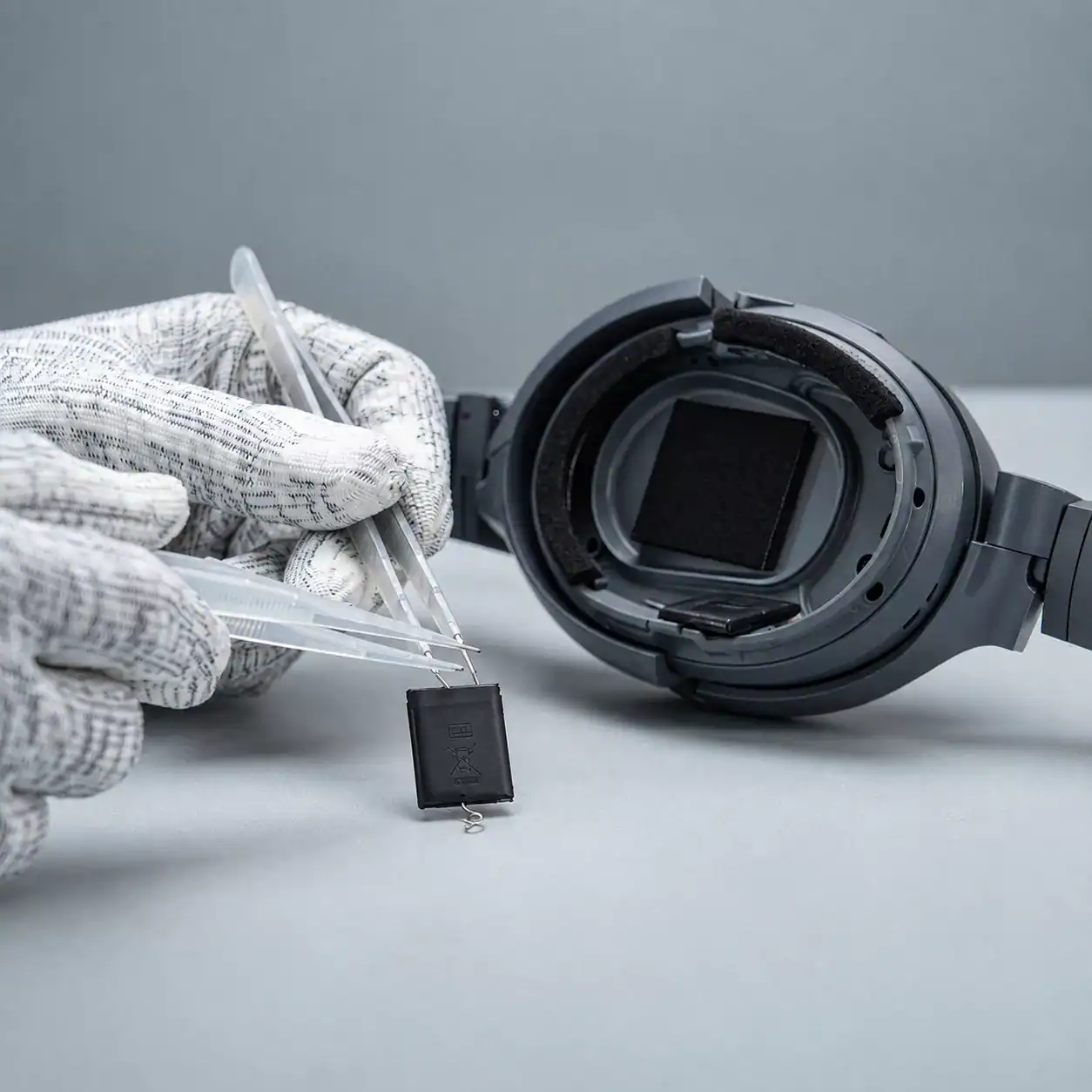
Three months after a shipment of over-ear headphones hits the market, the distribution channels start receiving a specific pattern of complaints: the earpad surfaces are peeling off black flakes, the foam has flattened and won't bounce back, and the pressure causes ear pain. The speakers are fine, the chips are functional, and the technical parameters are spot on, yet returns keep pouring in. The root cause of these returns often lies not in acoustics, but in a layer of material that buyers rarely scrutinize during sample approval: the earpads. The earpad is typically the first component of the entire unit to fail.
The Vulnerability of Earpads
The earpad is the only part of the headphone that maintains direct contact with the skin, soaking in sweat and sebum for hours daily while enduring repeated compression and friction. Most mainstream over-ear headphones use "protein leather"—a polyurethane (PU) based synthetic leather—with a slow-rebound memory foam core. The moisture and salt in sweat accelerate the hydrolysis of the PU coating. This aging process causes the coating to decompose when exposed to humidity, resulting in a sticky surface, cracking, and eventual flaking.
Foam failure takes a different form. After being compressed hundreds of times daily, the foam’s resilience weakens and its thickness diminishes—a phenomenon known in the industry as "compression set." This compromises the seal between the earpad and the head, leading to a drop in passive noise isolation. The user’s subjective experience is that the sound quality has degraded and noise cancellation has weakened, even though the internal hardware remains unchanged.
Failures Happen in the Field, Not at the Desk
There is a critical timing issue at play. Protein leather peeling and foam collapse almost never appear during the initial sample sign-off. A short 20-minute desktop test only evaluates the material in its pristine state. Failures emerge months later in the hands of the end-user. By then, the products are already deep in the distribution channel, and the cost of handling returns and negative reviews is an order of magnitude higher than fixing the issue at the factory level.
Therefore, verification of earpad materials must be completed before mass production release. Waiting for return data to speak means the financial loss has already occurred.
Defining Earpad Specs in the RFQ Stage
Many Requests for Quotation (RFQs) simply list "protein leather and memory foam," leaving a massive amount of technical room for interpretation. Not all protein leathers are created equal; the abrasion resistance of the coating, the thickness, and the supplier grade vary significantly. Similarly, memory foam varies in density and rebound metrics. A buyer should require the factory to clarify at least three things:
- The specific type and grade of the surface material.
- The type and density of the foam.
- Whether the earpads are detachable and replaceable.
Clear material specifications ensure that quotes are truly comparable. If two factories offer the same price, but one uses high-abrasion coatings with high-density foam while the other uses low-grade PU and standard foam, they might feel similar during the sample stage. Six months later, however, the feedback from the channel will be worlds apart.
Required Testing Evidence
Regarding abrasion resistance, you should request friction test data. For synthetic leathers and soft fabrics, the Martindale vs. Taber Abrasion Testing methods are common. These involve rubbing the material against a standard abrasive until damage occurs, corresponding to standards like ISO 12947 or ASTM D4966. For coated surfaces, rotary abrasion methods are often used. Note that results from different methods cannot be directly converted, so check which method and conditions are specified in the factory report.
Regarding aging, ask the factory if they have conducted artificial sweat tests and high-temperature/high-humidity aging tests. PU hydrolysis is the chemical root of flaking, and humid climates significantly accelerate it. If a factory can cite their testing conditions, it shows earpad longevity is on their control list; if they cannot, the risk should be treated as unmanaged. For foam, look for "compression set" test results; a "hand-feel" rebound test is no substitute for data.
Hands-on Inspection at the Sample Stage
During sample approval, perform a manual audit of the earpads:
- Press the foam to check the speed and degree of recovery.
- Pinch the surface to see if the coating feels tacky.
- Inspect the stitching and bonding areas for flatness.
- Wipe the surface with a slightly damp cloth to check for color bleeding or coating transfer.
- Wear the headphones for at least 30 minutes to assess heat buildup and clamping pressure.
The criteria should match the product positioning. For office-centric headphones, durability is the priority. For sports-oriented products, sweat resistance and anti-slip requirements are higher, requiring stricter aging and friction test conditions.
Managing Earpads as Accessories
A pragmatic way to lower return costs is to design the earpads as a detachable structure and include replacement pads as accessories with the order. Earpads are essentially consumables. Instead of having a user return an entire headset because the pads have aged, providing low-cost replacements allows the channel or the user to swap them out. This requirement must be raised during the structural design phase; changing the mounting method after mass production starts is significantly more expensive.
Conclusion
Earpad material failure won't show up on your sample desk, but it will certainly show up in your return data. By clarifying material specs in the RFQ, obtaining evidence of abrasion and aging resistance before release, verifying the feel on samples, and managing earpads as replaceable accessories, you can block one of the most overlooked causes of returns before mass production begins. If you are currently evaluating a headphone OEM or ODM project, incorporate these earpad requirements directly into your RFQ to align with the factory on specifications and testing protocols.