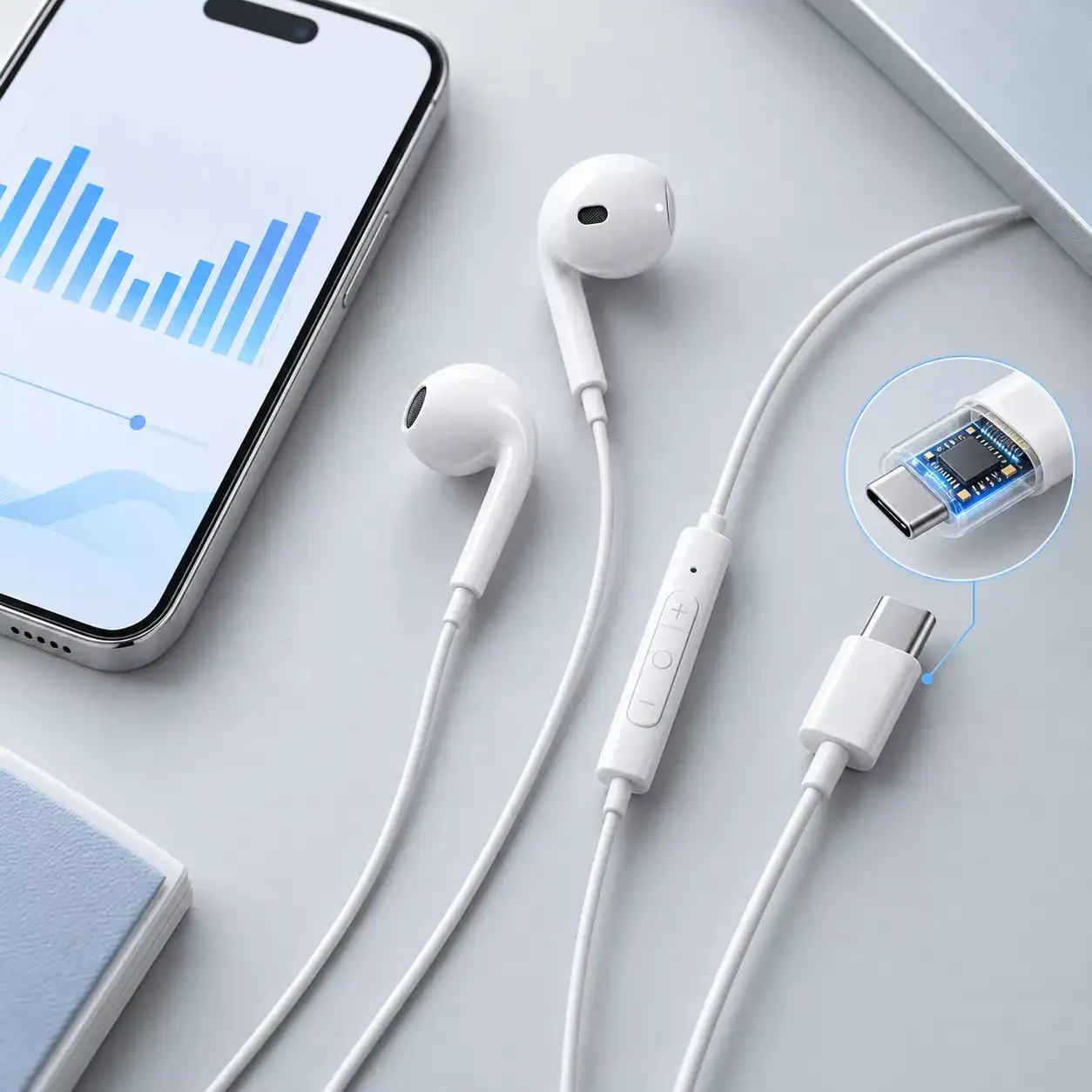
After a trade show in Hong Kong ends, buyers usually take a bag of samples back to their hotel. That night, listening again in the room, some headphones sound different from what they heard at the booth. Same pair of headphones, but with your own phone and volume settings, the sound changes.
This doesn't mean the samples are defective. The units at the booth were built for demos: hand-assembled, hand-tuned, and paired with phones and volume levels the factory chose in advance. Those conditions don't automatically carry into the production line. To make mass-produced units match what you heard at the booth, the demo conditions first need to be turned into written specs. A trade show sample can help you judge, but it is not a production benchmark on its own.

What Changes Between the Show Floor and Mass Production
Start with firmware, the most common problem. Firmware is the control software running inside the headphones. It decides the sound tuning, noise cancellation, and button response. The demo unit may run a firmware version hand-tuned by the factory just for the show, or one that hasn't reached official release. Mass-produced units ship with the final version. The same headphones with different firmware will shift the balance between bass and treble, so the sound you remember at the booth won't match. That's why the spec sheet must state the demo unit's firmware version and require the factory to confirm the production units use the same one.
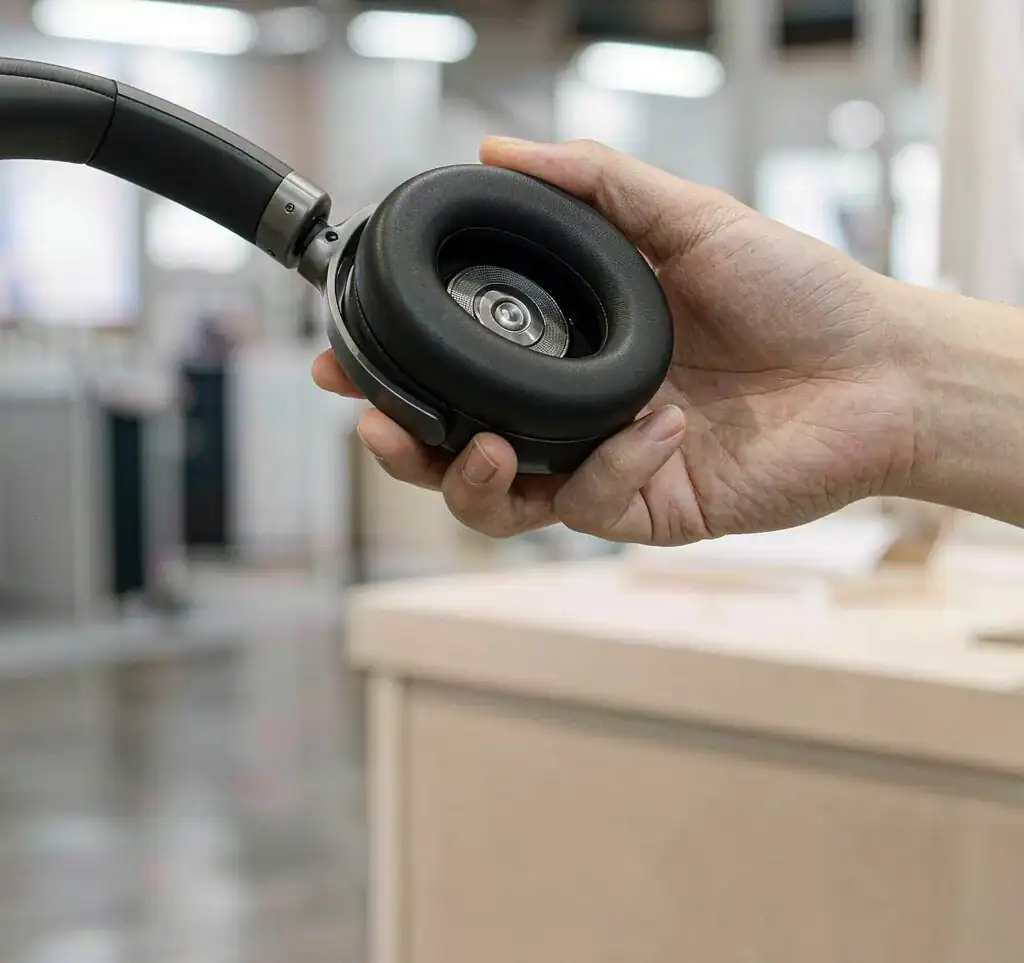
Materials change too. The ear pads at the booth are fresh out of the box, with the best rebound and seal they'll ever have. Pads on shipped units go through compression from transport and warehouse storage first, then users wear them for months. A few minutes of wearing at the booth can't predict how they'll feel after two months of real use.
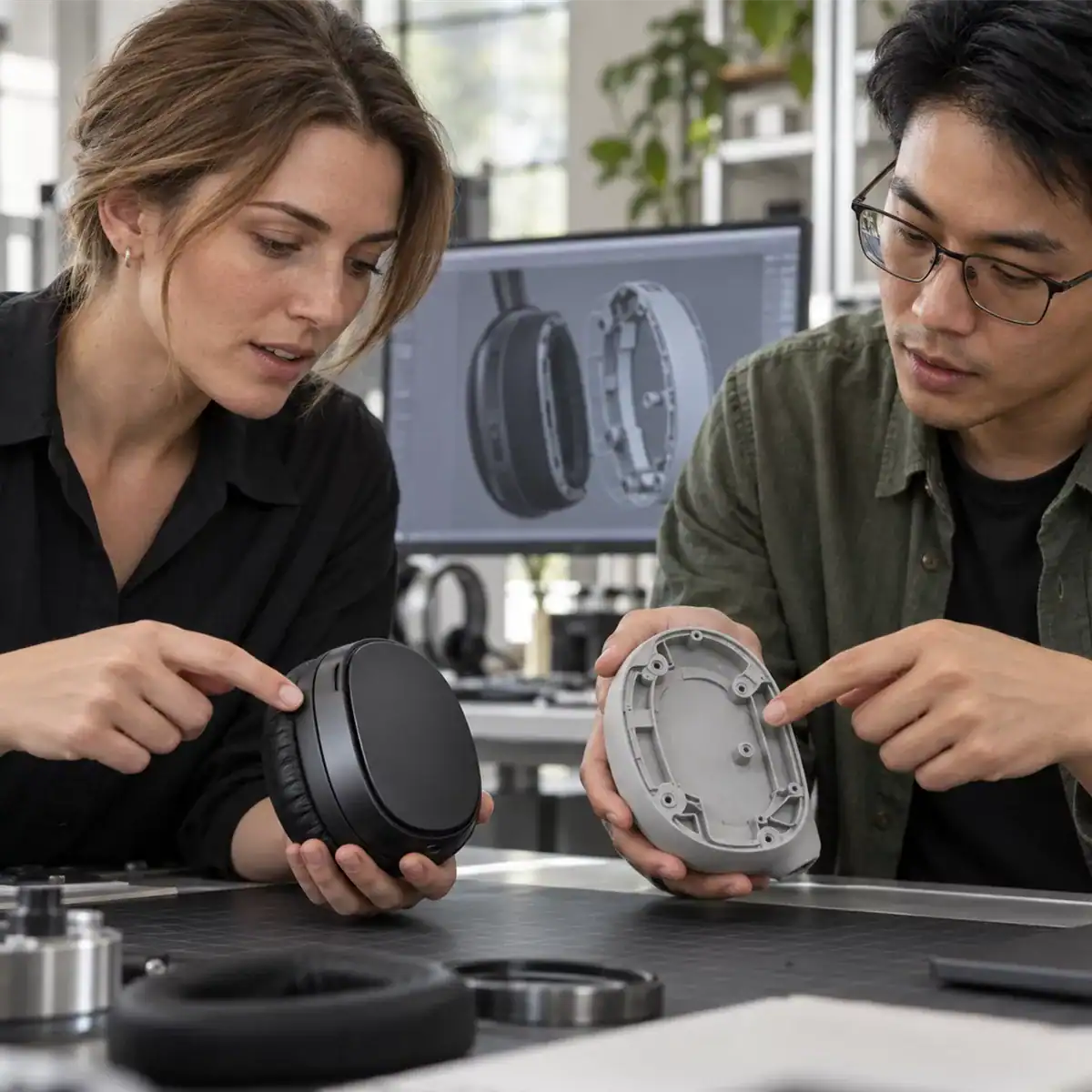
One more hidden factor: assembly. Booth units are hand-picked and hand-assembled, while production units come off the line with normal tolerance variation. Even with an identical design, a carefully chosen demo unit can perform better than the production average.
A Show Floor Impression Is Not Data
What you hear at the booth is half the headphones and half the environment the factory set up. The phone is the factory's, the volume is the factory's setting, the sound mode is the factory's choice—even where you stand is arranged by the factory. The hall is full of crowd noise, so sound leakage is impossible to notice. If the factory leads you to a quiet corner to test calls, even average call noise cancellation can seem good enough.
Testing this is easy: back at your hotel, listen again with your own phone, your own playlist, and volume set to your usual level. Only impressions that survive this step are worth taking into the next round of comparisons. First impressions from different factories can't be compared side by side, because every booth has different demo conditions.
Lock Down the Sample's Identity First, Then It Can Be a Benchmark
For a booth sample to become a production benchmark, it needs a dated spec sheet. The sheet must clearly list the drivers (the parts that produce the sound), the chip solution for wireless connection, the microphones, the battery, the ear pad material, and the firmware version.
This sheet isn't paperwork for its own sake. It exists to confirm the factory can reproduce the exact unit you tested. If the factory can't tell you exactly what's inside the sample, that sample cannot serve as a production benchmark. Writing "same as sample" on a purchase order isn't a spec either—once the goods ship, no one can check what that "same" actually means.
Booth Claims That Don't Survive Verification
Some claims don't survive a plain retest. Every one of them needs to be tested again before approval.
| Booth claim | Where production may differ | What to retest before approval |
|---|---|---|
| Battery life | Test volume and working mode were not specified | Run battery tests at the buyer's specified volume and mode |
| Call quality | Tested in a quiet corner of the booth | Test calls under controlled background noise and keep remote-end recordings |
| Wearing comfort | Used freshly unwrapped demo pads | Do fit checks with production-intent pads and correct eartip sizes |
| Certifications | Catalog claims or verbal statements at the booth | Match documents to the actual configuration and target markets |
Results at the booth are just one demo. Production decisions need evidence you can reproduce and write down. If the evidence isn't there, record that claim as unverified—don't give it credit just because it's printed in a catalog.
When a Revised Sample Arrives, Retest Only What Changed
Factories often send a revised sample after the show. If the ear pads changed, the seal changed, so retest both fit and sound. If the firmware changed, retest only the features that firmware controls.
Parts not touched on the spec sheet don't need a full retest round—that's exactly what the dated spec sheet buys you. The same logic applies after approval: if the factory requests a material change mid-production, test only the swapped part and the features it affects, not everything from scratch.
Before placing an order, buyers should send their intended use, must-have features, and trade show notes to Sonun. Sonun will prepare a sample based on these, along with a dated configuration sheet—so the production benchmark is put on paper before mass production starts, instead of being reconstructed later when the first complaints arrive.