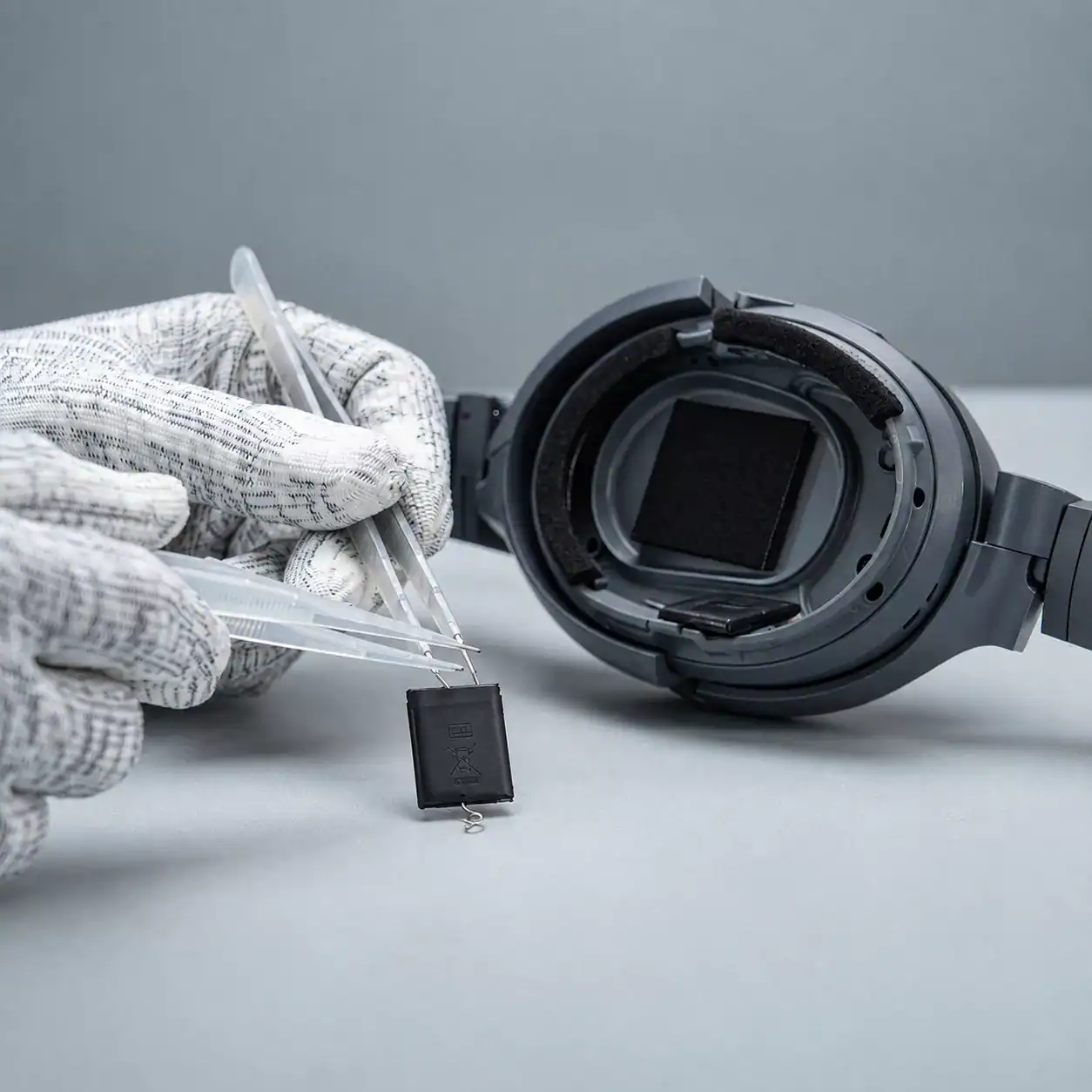
An approved headphone sample defines the product the buyer expects to receive. It confirms the appearance, sound, functions and overall user experience.
Production preparation often continues after sample approval. The original component can become unavailable, its lead time can increase, or its quality can fall below the project requirement. The manufacturer then needs to propose a replacement.
A component change is acceptable only when it is documented, validated and approved before entering mass production.
Lock the Approved Version
Before approving the sample, record the configuration behind it. This includes the BOM revision, key component models, firmware version and agreed performance requirements.
The approved sample should be sealed or clearly identified as the reference unit. Its technical records must match the physical product.
Without this baseline, the buyer and manufacturer cannot prove whether the production version remains consistent with the approved sample.
Classify the Change
Different components require different approval actions. The correct response depends on what the changed component controls inside the finished product.
| Changed component | Direct concern | Required buyer action |
|---|---|---|
| Housing or surface finish | Color, texture and assembly fit | Compare it with the approved sample |
| Speaker driver | Frequency response, volume and distortion | Review acoustic results and approve a new sample |
| Microphone | Voice pickup and noise reduction | Repeat call-quality tests |
| Battery or charging component | Runtime, charging and temperature | Repeat the affected electrical tests |
| Chipset, antenna or PCB | Connectivity, firmware and radio performance | Start engineering and compliance review |
Component price should not determine the level of review. A low-cost microphone still controls call quality. A small antenna adjustment still changes a critical part of wireless performance.
Review the Evidence
The manufacturer should submit the change before purchasing or using the replacement part for mass production.
A proper change request identifies the old and new components, explains why the replacement is necessary and compares the relevant specifications. It should also state which product requirements are affected and which tests will be repeated.
Statements such as “same quality” or “same specification” are not approval evidence.
If the component manufacturer, part number or technical comparison is missing, the buyer does not have enough information to approve the change.
Validate the Replacement
Testing must follow the function controlled by the changed component.
A driver replacement changes a core acoustic variable. Approve it only after comparing frequency response, distortion and listening performance with the approved sample.
A microphone replacement changes the voice pickup path. Repeat call tests under the intended office, outdoor or gaming conditions.
The same rated battery capacity does not prove equivalent performance. Verify runtime, charging behavior and temperature performance under the agreed test conditions.
The replacement sample and affected test results must be approved before the new component is released for mass production.
Review Compliance Impact
Do not assume that existing compliance documents remain valid after a technical change.
For European projects, the EU Blue Guide states that technical documentation should reflect product redesigns and reassessments. Update the documents and tests connected to the changed part. Unaffected areas do not automatically require repeated testing.
Bluetooth-related changes require a separate review. The Bluetooth Qualification Process distinguishes an existing unmodified design from a different design.
Treat a chipset, firmware, antenna or Bluetooth design change as a qualification risk until its impact has been reviewed against the applicable requirements. Complete this review before approving the production configuration.
Release Materials Before Production
After the replacement receives technical approval, update the BOM revision, component specifications and reference sample. Record the production lot from which the new component becomes effective.
Before mass production starts, verify the incoming component against the approved manufacturer, part number, specifications and reference sample. Complete the required incoming inspection and affected performance tests before releasing the material to the production line.
For a performance-critical change, complete a controlled trial build before full production. This confirms that the approved component also performs correctly after assembly.
If the incoming material or trial result fails, hold the material and stop production release.
Verify the Production Start
At the start of the first production lot, conduct a first-article inspection. This step confirms that the production line is using the approved component and following the updated BOM.
Test finished units early in the production run while the remaining batch can still be stopped. This is a second control point, not a replacement for pre-production verification.
If the first units fail the approved requirements, stop or hold production before the full batch is completed.
Record the component lot number, production lot and inspection results. These records connect each finished product version to the correct material and test evidence.
Reject Uncontrolled Changes
Reject or delay a change when its source is unclear, comparison data is missing or production has started without buyer approval.
Production pressure does not replace technical evidence. A late delivery is visible and manageable. An uncontrolled component change can enter an entire order before the resulting problem becomes visible.
The approval rule is clear. No documented evidence, no completed validation and no written approval means no production release.
When requesting an OEM or ODM quotation from Sonun, provide the target market, required functions and key performance expectations. Also identify which components require written approval before replacement. This gives both sides one clear production reference from sample approval through mass production.