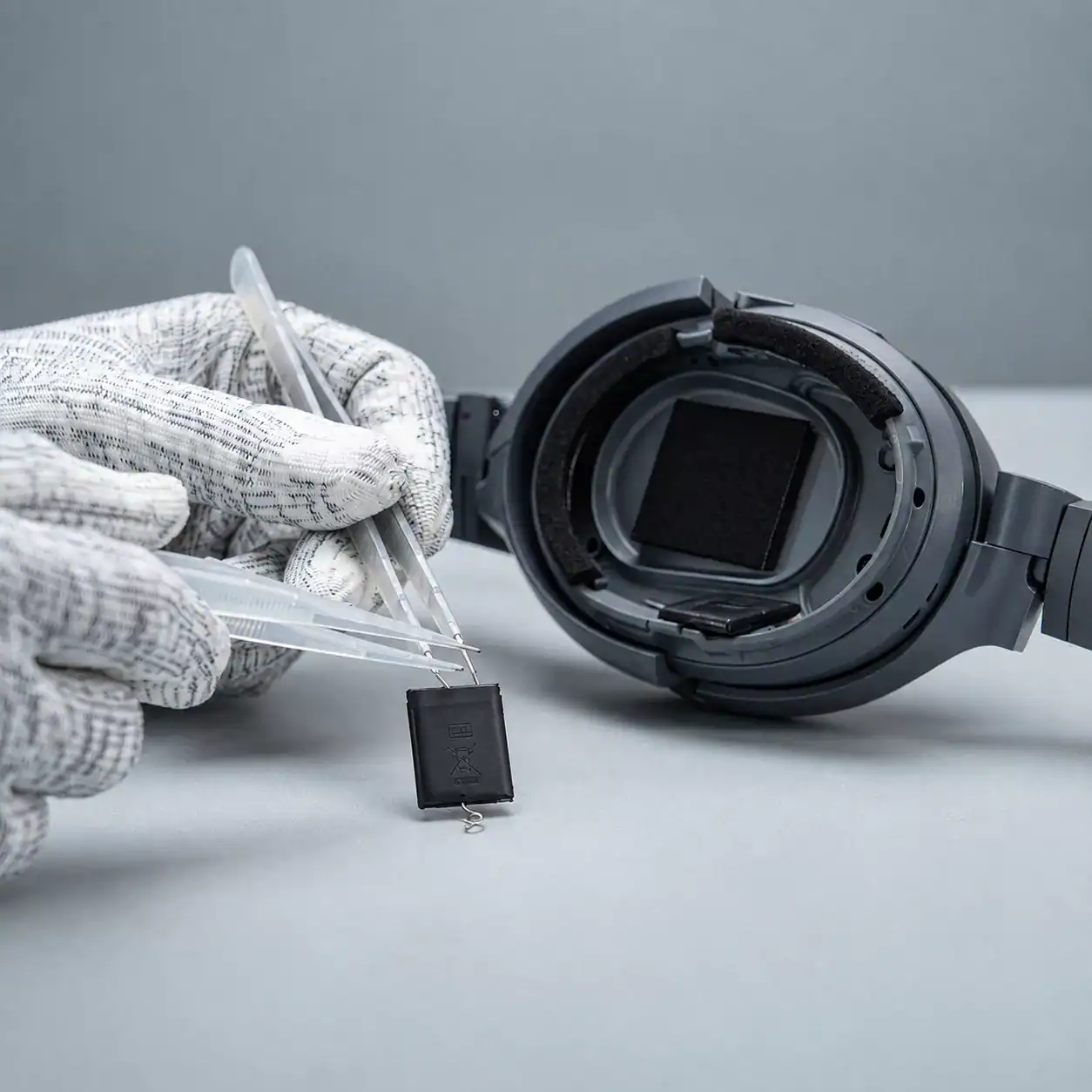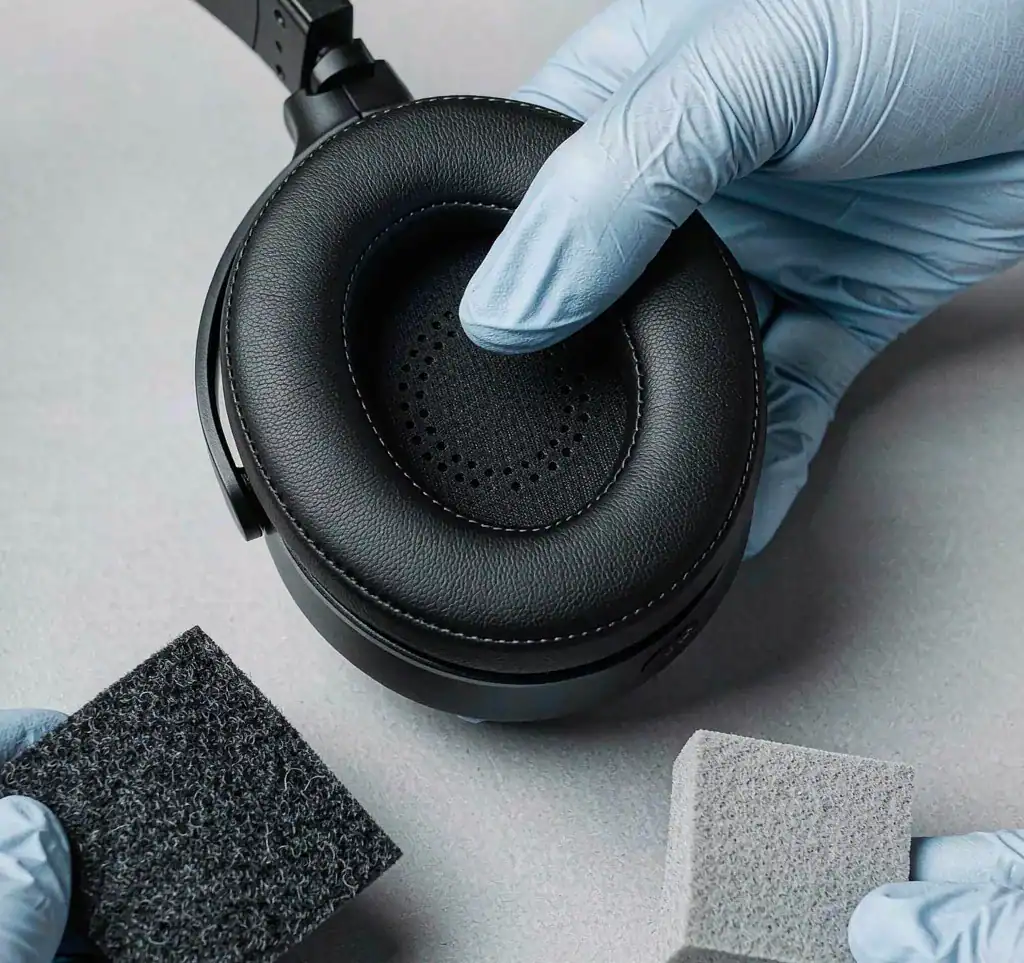
A pair of over-ear headphones lists 60 hours of battery runtime on its spec sheet. After three months of use, the top complaint in customer reviews is that the real-world battery life never hits that number. The speakers work fine, Bluetooth stays connected, yet customers return the product simply because the advertised runtime doesn’t match what they actually get.
Most of these gaps aren’t because manufacturers are cheating. The rated battery number and real-life usage are just measured under completely different conditions from the start.
Rated battery life is measured under specific lab conditions
Headphone makers run battery tests using a fixed set of rules: a set volume level, a standard test audio signal, a controlled temperature, and in most cases, active noise cancellation (ANC) turned off.
There’s nothing wrong with these test parameters themselves. The problem is buyers rarely know what those conditions are when they see the runtime number.
Take the same headphones. Turn the volume up one notch, switch ANC on, or use audio with a higher bitrate, and battery life can drop drastically. On the flip side, manufacturers can get an impressive-looking runtime if they set test conditions to be very lenient.
So when you get a quoted battery runtime, don’t just look at the number. Ask the factory for their full test conditions: what volume they used, what audio signal they played, and whether ANC was enabled or disabled.
Run your own tests at the sample stage
You need to verify the factory’s numbers. The most reliable data comes from tests you run yourself on samples. Lock in all variables before you start testing:
- Keep volume fixed at the same level for every sample.
- Run two separate tests: one with ANC on, one with ANC off, and log both results.
- Use real music from streaming services, not lab-standard test tones.
- Record ambient temperature, as results change between summer and winter.
Compare your test results to the factory’s rated figures. If the difference falls within your acceptable range, the sample passes. If not, take your test data and negotiate with the factory.
The goal isn’t to get perfect battery numbers. It’s to set acceptance criteria based on your own real-world test rules, not the factory’s lab rules.
Battery runtime degrades with charge cycles
A brand-new battery delivers its best performance. For lithium-ion batteries, one full charge-discharge counts as one cycle. As cycles add up, battery capacity fades — this is a natural chemical property, and no factory can change it.
Battery life after six months of regular use is what really shapes your retail customers’ feedback.
That means at the sample stage, besides testing new-unit runtime, ask the factory for two documents: the cell datasheet and the capacity fade curve. The datasheet lists capacity, internal resistance and recommended charging parameters. The curve shows how capacity drops as charge cycles build up. If the factory can’t provide either, they likely haven’t properly tracked battery lifespan at all.
Also ask about the charging design. Fast charging puts more stress on lithium cells than regular charging and speeds up capacity loss over time. If your product is built for heavy daily use, the charging strategy has to match the cell specs, not just chase fast-charging marketing claims.
Battery safety & shipping certifications
Beyond runtime, lithium batteries have mandatory compliance requirements. Lithium cells in headphones need safety testing. The widely accepted standard is IEC 62133-2, which covers safety risks from overcharging, short circuits, drops and high-temperature exposure.
For export shipping, lithium batteries must also pass UN 38.3 transport testing. Without this certification, shipments cannot go by air or sea freight.
Confirm the factory can provide these documents at the RFQ stage. Don’t wait until shipment day to find out certifications are missing. The cell part number listed on the certificates must match the actual cells installed in your headphones. Any cell replacement requires updating the certifications accordingly.
Include battery runtime in your acceptance criteria
All the checks above need to be written into formal documents. In your acceptance specs, clearly state:
- Minimum acceptable battery runtime under your defined test conditions.
- Separate minimum runtime requirement for ANC turned on.
- Re-testing is mandatory if you swap battery cells, update firmware, or adjust ANC tuning.
Use this exact same test process for random sampling during mass production.
This turns advertised battery life from a marketing number into a contractual, measurable spec with clear minimums that can be re-tested. If retailers get customer complaints about battery life later, both buyer and seller have objective data to reference.
Wrap-up
Battery runtime complaints are the most common headphone after-sales issue, and nearly all of these problems can be fixed before mass production.
- Request the factory’s battery test conditions
- Run your own real-world tests on samples
- Check cell datasheets and cycle fade data
- Write the requirements into acceptance criteria
Complete these four steps, and you’ve properly validated battery runtime. When evaluating OEM/ODM projects, include battery test requirements directly in your RFQ. This pushes factories to provide verifiable numbers from the quoting stage.